The Ultimate Guide to Incoterms 2020: Who Pays Freight and Duties? SEO Description FOB or DDP—seems simple until fees explode. Incoterms 2020 reveals hidden risks in China shipping before your cargo hits port. Incoterms 2020 isn’t just fine print—it’s the line between a smooth shipment and a bill that makes your stomach drop at the […]
The Ultimate Guide to Incoterms 2020: Who Pays Freight and Duties?
SEO Description
FOB or DDP—seems simple until fees explode. Incoterms 2020 reveals hidden risks in China shipping before your cargo hits port.
Incoterms 2020 isn’t just fine print—it’s the line between a smooth shipment and a bill that makes your stomach drop at the port.
Suppliers toss around FOB, CIF, DDP like it’s obvious, yet costs sneak in, risk shifts mid-journey, and suddenly you’re paying for surprises you never agreed to.
Recent from the International Chamber of Commerce and UN bodies highlight confusion in term usage, causing disputes and unexpected charges.
Introduction to Incoterms 2020
Global shipping can feel messy on a busy day. This cluster breaks down how Incoterms 2020 came to be and why the 2020 update matters, using plain talk, real trade habits, and practical cues that match how deals are actually handled.
Evolution of Incoterms – From 1976 to 2020
The story of Incoterms history is less about paperwork and more about fixing everyday trade headaches. Since 1976, the ICC rules have shifted to match how cargo really moves.
-
Early Incoterms revisions focused on ocean freight basics
-
Air and container trade pushed international trade rules to adapt
-
Multimodal shipping reshaped trade term evolution
That growth followed a pattern:
-
Clarifying who pays, who risks, and when
-
Aligning seller and buyer duties across borders
-
Updating language to match real international trade rules
Under the hood, changes landed in layers:
-
Core terms like FOB and CIF stayed familiar
- Yet their risk points tightened
-
New transport habits forced clearer handoffs
- Especially for mixed-mode cargo
By 2020, Incoterms 2020 reflected decades of trial, error, and sharper expectations. Many logistics teams working with FastShip China rely on this timeline to explain why today’s Incoterms 2020 rules feel stricter, but fair.
What’s New in Incoterms 2020 Rules
The Incoterms 2020 changes weren’t flashy, just practical. Small edits fixed big misunderstandings in updated trade terms.
Key moves showed up fast:
-
DPU replaced DAT for delivery clarity
-
CIP raised insurance levels
-
Costs and security duties became harder to dodge
The flow of updates often plays out like this:
-
Contract drafted with Incoterms 2020 named clearly
-
Insurance and security checked earlier
-
Costs tracked line by line
Under new Incoterms features, exporters noticed fewer gray zones, while importers gained cleaner compliance paths.
The International Chamber of Commerce noted in a 2024 guidance update that consistent use of Incoterms 2020 “continues to reduce contractual friction when parties apply the rules as written.”
These Incoterms 2020 amendments now shape daily trade practice updates, especially for teams coordinating with FastShip China, where precision beats guesswork every time.
Grouping Incoterms by Transport Mode
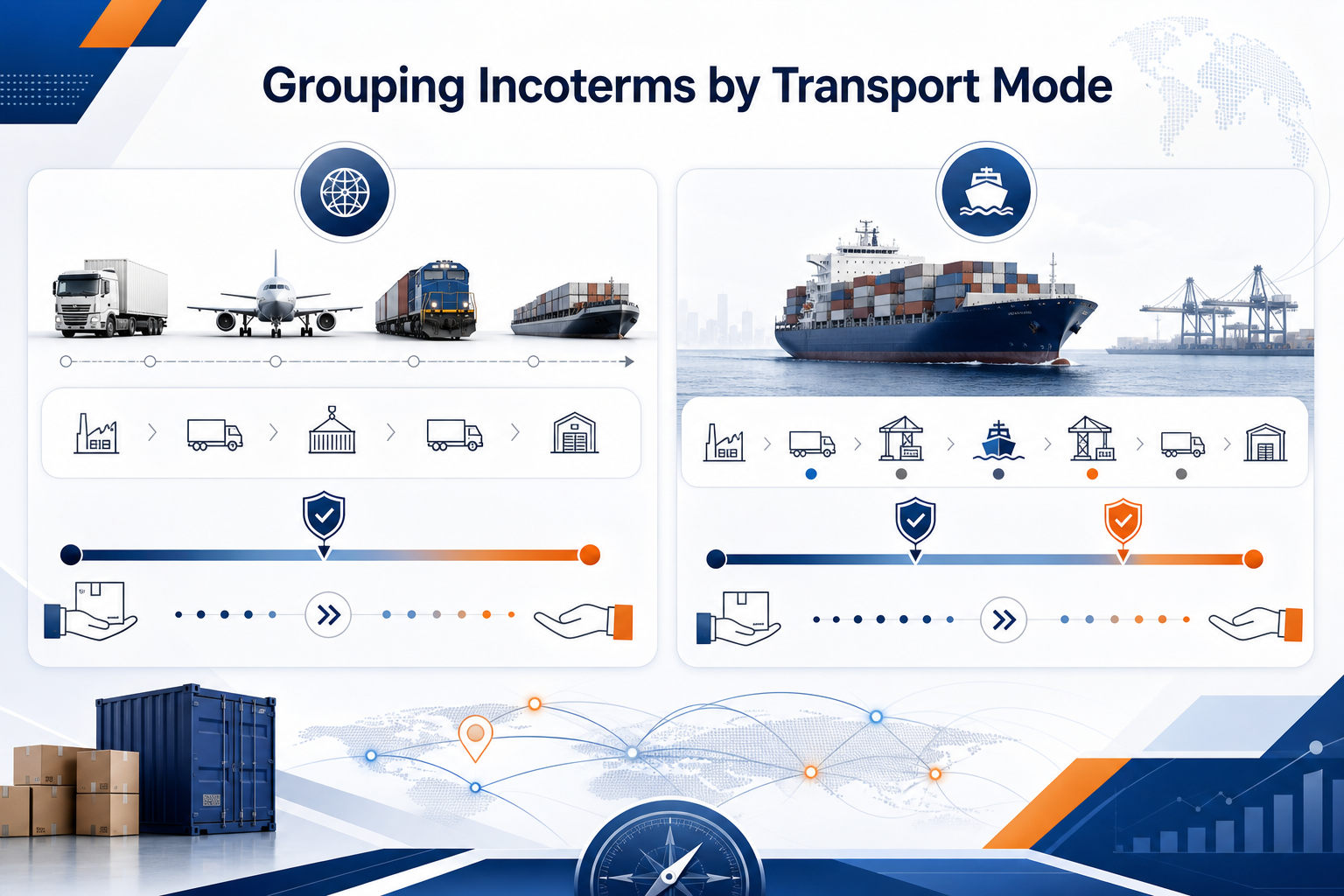
Getting Incoterms 2020 right feels less like law school and more like street smarts. These Incoterms rules, updated in 2020, decide who pays, who worries, and when Risk Transfer actually happens. Break them down by transport mode and things click faster. This quick guide keeps the tone real, mixes Incoterms 2020 basics with daily shipping habits, and shows how FastShip China helps keep deals clean and drama-free.
The All-Mode Terms EXW, FCA, CPT, CIP, DAP, DPU, DDP
-
EXW and FCA sit early in the journey, locking in seller limits on loading and export.
-
CPT and CIP stretch seller costs deeper into transit, with CIP adding insurance.
-
DAP, DPU, DDP push responsibility close to the buyer’s door.
-
Pre-carriage control shifts early under EXW.
-
Main carriage costs expand under CPT and CIP.
-
Final delivery risk peaks with DDP.
-
▶ Risk Transfer vs Cost Allocation
-
Seller-heavy: DDP, DPU
-
Balanced: CIP, CPT
-
Buyer-heavy: EXW
-
| Term | Risk Transfer Point | Seller Cost Scope |
|---|---|---|
| FCA | Carrier handover | Export cleared |
| CIP | Carrier handover | Freight + insurance |
| DDP | Place of delivery | All costs |
Used across air, rail, and road, these Incoterms 2020 options shine in multimodal moves, especially when FastShip China lines up contracts cleanly.
Sea-Only Terms: FOB vs CFR vs CIF
-
FOB works best for bulk cargo at the Port of Destination chain’s start.
-
CFR adds ocean cost, not risk.
-
CIF layers in Marine Insurance.
• FOB: buyer books Ocean Freight, risk passes at loading.
• CFR: seller pays freight, buyer still carries risk.
• CIF: seller covers freight and insurance, risk unchanged.
Short take: all three flip risk at the port, but Seller Responsibility grows from FOB to CIF. For container shipping, these Incoterms 2020 sea terms often cause headaches, which is why many shippers lean on FastShip China to steer deals toward safer all-mode choices.
Freight Payment Responsibilities
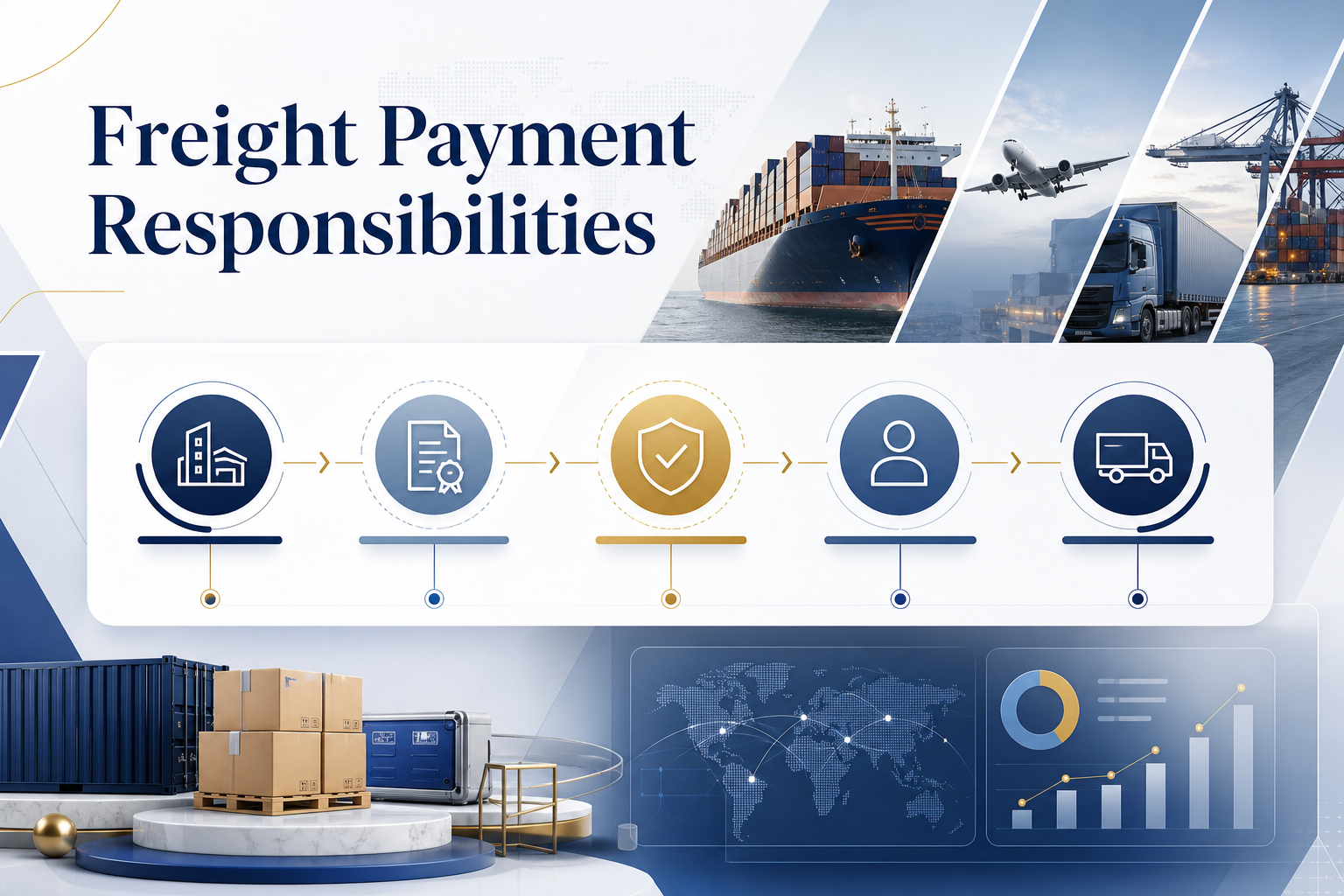
Understanding freight payments under Incoterms 2020 feels less like law school once the cost lines are clear. This cluster breaks down who pays, who risks, and where money changes hands across common Incoterm rules. Using everyday trade talk, a few numbers, and real logistics habits seen by FastShip China, the goal is simple: fewer surprises, smoother moves.
Who Covers Loading Charges under EXW and FCA?
Under EXW, the Buyer Responsibility kicks in early. The Point of Transfer is the Seller’s door, plain and simple.
-
Loading Charges sit with the buyer
-
Export Clearance also lands on the buyer
-
Seller Responsibility ends before trucks roll
With FCA, the tone changes. The seller loads, clears export, and hands off at the named place.
-
Seller prepares goods
-
Seller loads to carrier
-
Risk shifts at carrier handover
In daily Incoterms practice, FCA feels more balanced and avoids awkward yard disputes.
Main Carriage Cost with CPT and CFR
Both CPT and CFR place Freight Costs on the seller, yet Risk Transfer jumps sooner than many expect.
-
CPT: risk passes at first carrier
-
CFR: risk passes once goods are on board
| Term | Main Carriage | Risk Point | Destination |
|---|---|---|---|
| CPT | Seller | Carrier | Named place |
| CFR | Seller | Vessel loading | Destination Port |
| FOB | Buyer | Vessel loading | Port |
The ICC’s 2024 Incoterms guidance notes that cost and risk “rarely travel together,” a line echoed in recent shipping audits.
Insurance Premiums – CIP vs CIF Comparison
Here’s the split that matters in Incoterms 2020 talk.
-
CIP includes higher Cargo Insurance
-
CIF sticks to basic coverage
CIP fits air and container trade, while CIF stays tied to ocean freight. For buyers, CIP’s broader Coverage Scope feels like a safety net, not a luxury.
On-Carriage Fees to Place of Delivery (DAP/DPU/DDP)
This is where sellers carry the load.
-
DAP
-
Seller pays transport to Delivery Point
-
Buyer handles unloading and Import Duties
-
-
DPU
-
Seller covers transport and unloading
-
Delivery must be at an unload-ready site
-
-
DDP
-
Seller pays everything
-
Transport
-
Duties
-
Taxes
-
Final mile to Final Destination
-
-
For shippers using Incoterms rules daily, this trio defines true door control. Many clients lean on FastShip China to price these lanes cleanly, especially when DDP margins feel tight.
Duties & Taxes Liabilities
Trade costs feel simple until Incoterms 2020 step in. Duties, taxes, and clearance fees don’t just sit on invoices; they shape cash flow, risk, and timing. Using Incoterms 2020, Incoterms rules, and Incoterm 2020 language keeps expectations straight and avoids messy handoffs.
Duty Payment Obligations under DDP vs DAP
Under Incoterms 2020, DDP and DAP split Duty Payment in very different ways.
-
DDP
-
Seller Responsibility
-
Covers Import Duties and local VAT
-
Manages destination compliance
-
-
-
DAP
-
Buyer Responsibility
-
Pays Import Duties on arrival
-
Controls clearance timing
-
-
A quick reality check:
-
With DDP, pricing looks higher, stress feels lower.
-
With DAP, costs look lean, surprises pop up late.
That’s why logistics teams working with FastShip China often align payment terms with cash planning, not just freight rates. Incoterms 2020 clarity keeps everyone sane.
Customs Clearance Fees – Export vs Import
Customs Clearance splits cleanly across borders, but the bills don’t.
-
On the export side:
-
Export Clearance
-
Documentation Fees
-
-
On the import side:
-
Import Clearance
-
Customs Broker Fees
-
Inspection Fees
-
€ Small costs stack fast.
€ Brokers charge per entry, not per smile.
€ Delays quietly burn margin.
Many shippers pair Incoterms 2020 with a pre-checklist so Customs Duties don’t land like a jump scare.
Impact of HS Code and VAT on Duty Calculation
Everything starts with the HS Code, part of the Harmonized System.
-
Classification layer
- Tariff Rates tied to product use
-
Value layer
- Taxable Value plus freight and insurance
-
Tax layer
- VAT (Value Added Tax) added after duty
“Accurate tariff classification remains one of the strongest controls against overpayment and dispute risk in cross-border trade.” — OECD VAT and Trade Policy Update, 2024
Mislabel the HS Code, and Duty Calculation goes sideways. FastShip China teams often review codes before booking, using Incoterms 2020 terms to forecast landed cost with fewer headaches and fewer emails.
Risk & Cost Transfer Points
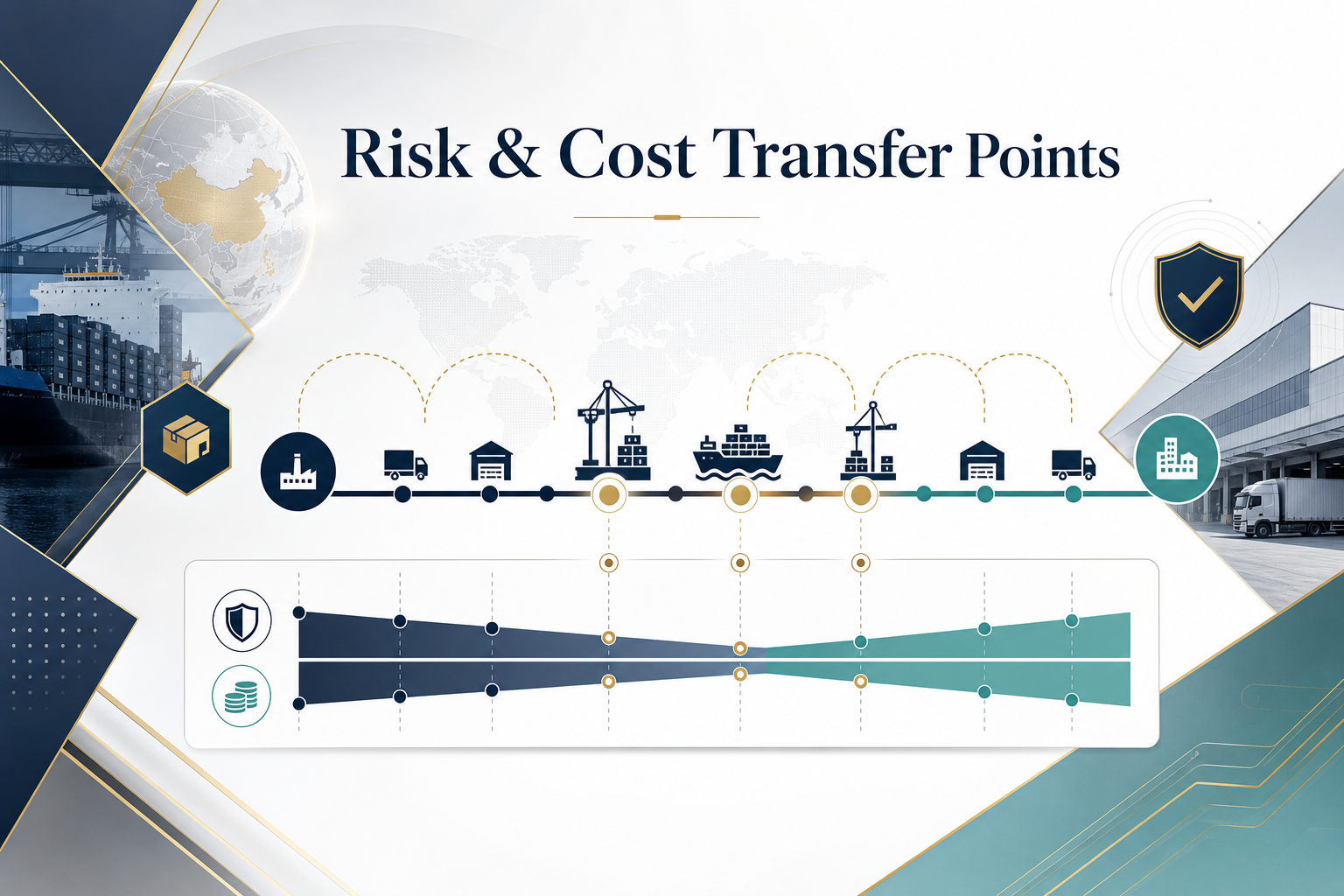
Moving goods under Incoterms, Incoterms 2020, and modern international trade terms often feels casual on paper, yet money and risk switch hands at very exact moments. This cluster clears up those moments, using plain talk, real trade habits, and guidance often shared by FastShip China advisors on daily shipments.
Risk Transfer at Carrier Handover – FOB and FCA
-
Risk Transfer sounds abstract until cargo hits the dock.
-
FOB and FCA split responsibility in ways many exporters still mix up.
Under FOB, the Point of Transfer sits at vessel loading.
1) The Seller Responsibility ends only after cargo is safely on board.
2) The Buyer Responsibility wakes up the second the goods cross the rail.
With FCA, things shift sooner, at Carrier Handover:
-
Seller hands goods to the named carrier.
-
Risk moves instantly.
-
Costs may not.
-
Nested reality check:
-
Port terminal delays
-
Seller risk under FOB
-
Buyer risk under FCA
-
That small timing gap explains why Incoterms 2020 guidance keeps stressing handover clarity in contracts.
Cost Transfer Moment in CPT and CFR
Costs and risk rarely travel together under CPT and CFR.
| Term | Risk Point | Freight Costs Paid By | Destination |
|---|---|---|---|
| CPT | Origin handover | Seller | Named place |
| CFR | Vessel loading | Seller | Port |
| CPT | Early transfer | Seller | Inland |
| CFR | Port-based | Seller | Seaport |
| CPT | Buyer risk | Buyer | Final |
-
Cost Transfer stays with the seller.
-
Transportation Costs look covered.
-
Import Duties still land on the buyer.
This split often surprises newer traders following Incoterms rules without reading the fine print. FastShip China teams flag this early to avoid awkward invoice calls.
Insurance and Risk Coverage: CIP vs CIF
Insurance is where stress shows up fast.
-
CIP demands higher Insurance Coverage.
-
CIF sticks to basic Marine Insurance.
Step-by-step contrast:
1) CIP uses broader Cargo Insurance.
2) CIF meets minimum market norms.
3) Risk Allocation stays buyer-side once risk transfers.
“Buyers increasingly underestimate insurance gaps under CIF,” notes a 2024 ICC logistics risk bulletin.
In short bursts:
-
CIP = wider safety net
-
CIF = cheaper, thinner cover
Under Incoterms 2020, this difference matters more than freight rates alone, a point FastShip China raises when cargo value climbs.
Documentation Essentials by Incoterm
A clean paper trail keeps cargo moving and tempers cool. Under Incoterms 2020, small document gaps still cause big delays. This guide breaks down how Incoterms, 2020, and modern trade terms shape paperwork, with a practical tone that fits day‑to‑day shipping life, not textbook theory.
Bill of Lading Requirements for Sea Freight
-
Bill of Lading duties under Sea Freight feel old-school, yet the stakes stay high.
-
Shippers double‑check names of Shipper, Consignee, and Carrier before sailing.
-
Ports matter more than people expect: Port of Loading must match customs filings; Port of Discharge drives delivery rights.
Nested reality in practice:
-
Contract side
-
Title transfer under FOB, CFR, CIF within Incoterms 2020
-
Risk handover tied to vessel loading
-
-
Physical side
-
Receipt confirmation
-
Release rules at destination
-
FastShip China often reminds clients that one typo can stall an entire container.
Air Waybill Nuances in Air Freight Incoterms
-
The Air Waybill stays non‑negotiable, always.
-
Air Freight under FCA, CPT, CIP leans on speed, not title transfer.
-
Responsibility locks in once the Airline accepts cargo.
Short beats that matter:
-
Airport of Origin stamps trigger carrier liability.
-
Airport of Destination controls claim handling.
-
Shipper and Consignee details drive security screening.
IATA’s 2024 air cargo outlook noted tighter data checks on Air Waybills, especially for cross‑border e‑commerce lanes.
Customs Declaration and Certificate of Origin Essentials
-
Customs Declaration feeds tariff math.
-
Certificate of Origin unlocks trade agreement savings.
Multi‑level view traders live with:
-
Data layer
-
Harmonized System Code accuracy
-
Declared Country of Origin
-
-
Cost layer
-
Import Duties
-
Export Duties
-
-
People layer
-
Customs Broker submissions
-
Audit follow‑ups
-
FastShip China aligns Incoterms rules and 2020 Incoterms guidance so clearance feels boring—in a good way.
Insurance Certificate: When and Who Issues It
Symbol cues shippers watch for:
-
✓ Coverage issued by Insurer or forwarder
-
✓ Applies to Marine Insurance or Cargo Insurance
-
✓ Names the Insured Party
Quick reference table under CIF/CIP:
| Coverage Type | Risk Start | Risk End | Linked Incoterms |
|---|---|---|---|
| Basic | Loading | Discharge | CIF |
| Extended | Warehouse | Warehouse | CIP |
| War Risk | Voyage start | Voyage end | CIF/CIP |
| Theft | Handover | Delivery | CIP |
| All Risk | As agreed | As agreed | Incoterms 2020 |
Risk transfer during the Voyage stays crystal clear when paperwork matches the Incoterms terms.
Applying Incoterms at Major Chinese Ports
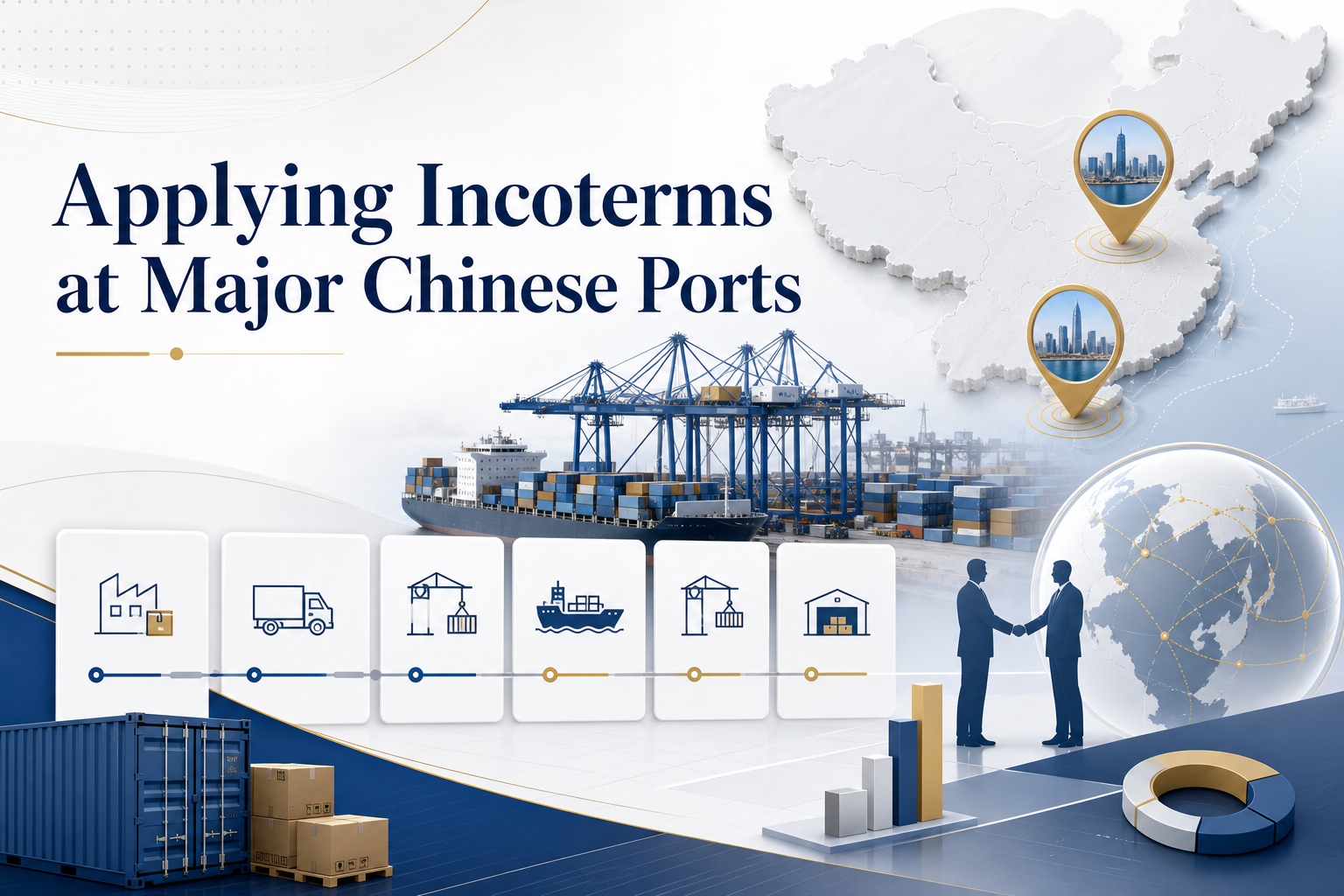
Trade at China’s busiest ports can feel like a daily hustle, with paperwork, trucks, and deadlines all moving fast. This guide breaks down how Incoterms 2020, Incoterms, and the 2020 rules play out on the ground in Shanghai, Ningbo, and Shenzhen. Plain talk, real port routines, and fewer headaches. That’s the goal, especially when every handoff counts.
Shanghai Port Ex Works – Pre-carriage and Customs Clearance
Under Ex Works (EXW) at Shanghai Port, the split of work is sharp and clear.
-
Seller’s Responsibility
-
Goods packed and ready at the gate
-
Basic support on Origin Charges
-
-
Buyer’s Responsibility
-
Pre-carriage booking and truck timing
-
Export Customs Clearance filings
-
Appointing a forwarder familiar with Incoterms 2020
-
A quick data snapshot seen by many operators:
| Task | Party | Typical Time (Days) | Risk Level |
|---|---|---|---|
| Factory pickup | Buyer | 1 | Medium |
| Export filing | Buyer | 1–2 | High |
| Port gate-in | Buyer | 1 | Medium |
| Docs check | Both | 1 | Low |
Block research updates in late‑2024 from global logistics analysts note that EXW misuse remains a top cause of clearance delays in East China.
Ningbo to Port of Discharge: Container Stuffing and THC
At Ningbo Port, Incoterms, 2020 rules decide who sweats the details.
-
Container stuffing may sit with the Freight Forwarder or Carrier
-
Terminal Handling Charges (THC) can flip sides based on the agreed term
-
Inland Transportation costs often surprise new buyers
Some shippers let sellers handle stuffing for speed, others keep control to manage risk. It’s a street-smart call, not just a contract line. Teams using FastShip China often flag Ningbo’s smoother yard flow when roles are locked in early.
DDP Shenzhen Import Permits and Trade Compliance
Delivered Duty Paid (DDP) into Shenzhen Port stacks the work on the seller.
-
Secure Import Permits
-
Appoint a local Customs Broker
-
Settle Import Duties and Taxes
-
Prove full Trade Compliance to the Final Destination
Miss one step and cargo stalls. DDP under Incoterms 2020 sounds easy, yet Shenzhen’s checks stay strict. When done right, though, buyers just wait for the knock on the door.